

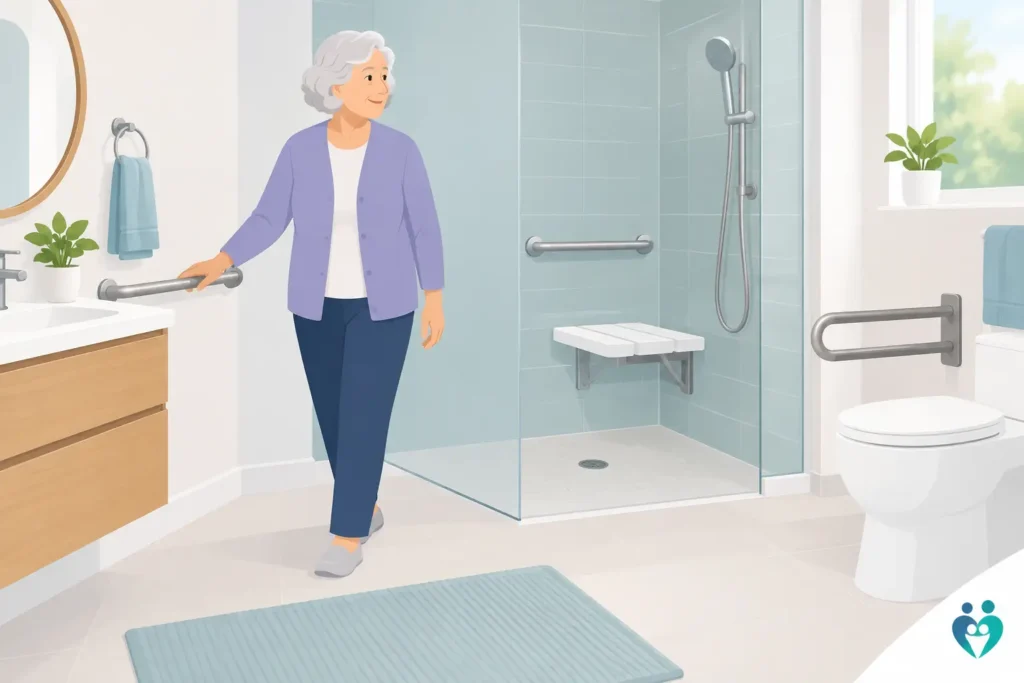
A Dementia-Friendly Bathroom Guide for Safer Days
A bathroom can become difficult long before a person says they need help. A dark floor may look like a hole, a shiny tile can seem wet, and an unfamiliar shower control can turn a normal morning routine into a worrying experience. This dementia-friendly bathroom guide focuses on practical changes that make bathing safer, calmer and more familiar, while protecting the dignity of the person using the room.
Dementia affects everyone differently. The right bathroom is not simply one with more equipment in it. It is a room arranged around the person’s current abilities, habits and preferences, with enough flexibility to support them as needs change.
Start with the person, not the product
Before choosing a walk-in shower, bath lift or wet room, consider what is actually happening in the existing bathroom. Is the main difficulty remembering the order of washing? Is it fear of stepping over the bath side, poor balance, confusion caused by reflections, or discomfort with help from another person?
A relative may be physically able to stand in the shower but become distressed by the sound of running water. Another person may still enjoy a long bath but struggle with the bath edge and need assistance transferring safely. These situations call for different solutions.
Try to observe a usual bathing routine without rushing it. Think about how the person enters the room, finds the toilet or basin, undresses, uses taps, dries themselves and leaves again. Small obstacles at each stage can add up to a loss of confidence. The aim is to remove unnecessary decisions and risks, not to take control away from them.
Where possible, involve the person in choices about layout, colours and equipment. Familiarity matters. A bathroom that feels attractive and recognisable is more likely to be used with confidence than one that feels clinical or imposed.
Reduce slips, trips and difficult transfers
Falls in the bathroom are a serious concern because water, hard surfaces and tight spaces leave little room for recovery. Good dementia-friendly bathroom design begins with a clear, easy route through the room and secure surfaces underfoot.
A level-access walk-in shower or wet room removes the need to step over a raised tray or bath side. This can be particularly helpful where mobility is reducing, a wheelchair is used, or a carer needs room to assist safely. A gently sloping wet-room floor can look modern and homely while directing water towards the drain.
Non-slip flooring is useful, but appearance matters too. Avoid highly patterned finishes, strong visual swirls and dramatic changes in floor level. These can be confusing for someone living with dementia, particularly if depth perception is affected. Matte finishes are usually easier to read than highly reflective tiles.
If a bath remains the preferred way to wash, a full-length or short-length walk-in bath may offer a more reassuring option. It allows the user to sit down before filling the bath, rather than lowering themselves over a high side. However, it does involve waiting inside while it fills and drains, which will not suit everyone. For some households, a shower bath with a secure seat or a powered bath may be a better match for the person’s routine and support needs.
Grab rails should be placed exactly where support is needed: near the entrance, beside the toilet, at the basin or in the showering area. They should be securely fitted and easy to distinguish from the wall behind them. A rail is not a substitute for a considered layout, but it can provide a welcome point of confidence during transfers.
Make the room easier to understand
Dementia can affect visual processing as well as memory. A person may see an object clearly but struggle to interpret what it is for, especially in an unfamiliar or cluttered setting. Simple visual cues can make the bathroom much easier to use independently.
Choose clear contrast between important fittings and their surroundings. A toilet seat that contrasts with the pan, a grab rail that stands out against the wall, and a basin that is visibly separate from the vanity unit can all help. Contrast does not mean bright colours everywhere. Calm, coordinated colours with enough distinction are often more comfortable than a busy room with sharp visual distractions.
Keep essential items visible and consistent. Towels, soap, toilet roll and toothbrushes should have a predictable home. Open shelving can work well for products used every day, provided it does not create clutter. Too many bottles, baskets and ornaments can make it harder to find what is needed.
Labels may help in the early stages of dementia, particularly on cupboards or drawers. Use plain words and, if useful, a simple image. Yet labels are not a solution for everyone. If reading is already difficult, the better approach may be to reduce storage choices and leave only the necessary items within easy reach.
Mirrors deserve thought. Some people enjoy them as part of their usual routine; others may be startled by their reflection or mistake it for another person. If mirrors cause distress, consider whether a smaller mirror, a covered mirror or relocating it would make the room feel calmer.
Support a safer bathing routine
The safest equipment is only helpful when it is simple to use. Controls should be clear, within reach and not crowded together. Thermostatic shower and bath controls help prevent sudden changes in water temperature, an essential safeguard if someone may struggle to judge heat accurately.
Good lighting reduces shadows and makes hazards easier to spot. Bright, even light around the basin, toilet and shower area is preferable to a single overhead fitting that leaves corners dark. Motion-sensor lights can be helpful for night-time visits, but they need careful positioning and a gentle setting. A sudden light switching on may unsettle some people, while a sensor that switches off too quickly can create anxiety.
Night-time bathroom journeys deserve particular attention. A clear route from bedroom to bathroom, low-level guide lighting and a clutter-free floor can prevent an avoidable fall. If the main bathroom is upstairs and stairs have become difficult, a downstairs shower room or wet room can make daily life much more manageable.
Consider privacy alongside safety. A bathroom door should be easy to open from the outside in an emergency, but the person should still be able to feel secure while using it. Avoid locks that could leave someone trapped inside. For households where wandering is a concern, seek individual advice rather than adding barriers without considering how they might affect safety in an emergency.
Choose seating and support with care
Bathing while seated can reduce fatigue, improve balance and make personal care less stressful. A fixed shower seat is often a neat, reliable choice in a walk-in shower or wet room. Fold-down versions save space when more than one person uses the room, while freestanding seats can be useful in some settings but may move if they are not selected and positioned properly.
The seat height, arm support and space around it all matter. A seat that is too low can make standing difficult; one that is too high may leave feet unsupported. If a carer assists with washing, there must be enough room to work without twisting or reaching awkwardly.
A raised toilet seat, supportive toilet frame or comfort-height toilet may also help, depending on the person’s strength and balance. These choices should feel natural to use rather than making the person feel singled out. The best adaptations often blend into a well-designed bathroom, offering support without announcing themselves.
Plan for carers without losing dignity
When family members or professional carers are involved, the bathroom must work for both people. Limited space can make assistance physically demanding and emotionally uncomfortable. A bespoke layout can create safer access around the toilet, shower and basin, reducing the need for carers to lift, strain or rush.
It is also worth thinking ahead. Dementia may progress slowly or change unexpectedly after an illness or fall. A full bathroom refurbishment can be an opportunity to install a level-access shower, reinforced walls for future grab rails, wider access and easy-clean surfaces before they become urgent needs. This does not mean assuming the worst. It means giving the household more choices later.
A professional home assessment can identify details that are easy to miss on a showroom visit, from the direction a door opens to the position of pipework, natural light and the room needed for a wheelchair or walking frame. For families in South Wales, Affect Ability can provide needs-led recommendations and manage the design and installation with the same care given to the finished appearance of the room.
A calmer room can protect confidence
A dementia-friendly bathroom should not feel like a medical space. It should feel safe enough for a person to continue familiar routines, ask for help when needed and retain as much independence as possible. Start with the difficulties happening now, make changes that suit the individual, and choose a design that brings reassurance to everyone who calls the home their own.