

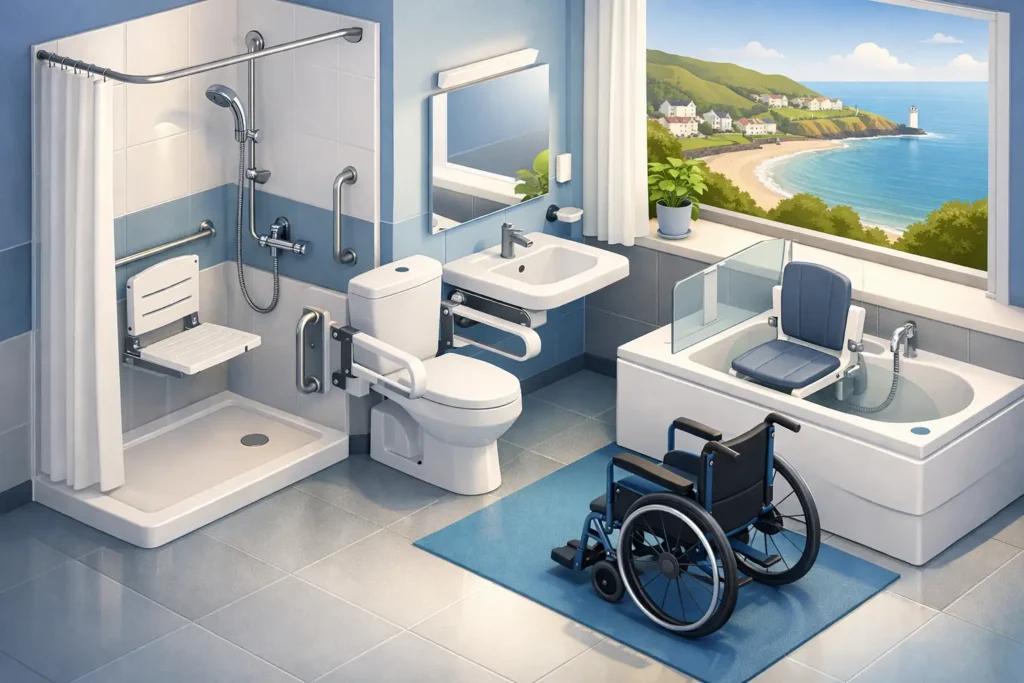
Accessible Bathroom Solutions Swansea South Wales
A bathroom should be a place where you can take your time, close the door and feel comfortable. When stepping over a bath edge, standing in a shower or transferring from a wheelchair becomes difficult, that ordinary routine can start to feel stressful. Accessible bathroom solutions Swansea South Wales households choose can restore confidence at home, without leaving the room looking clinical or impersonal.
The right answer is rarely the same for every household. A person who enjoys a long soak may need a very different solution from someone who wants a quick, level-access shower. The layout of the room, available space, mobility needs, carers’ requirements and budget all matter. A careful home assessment makes sure the finished bathroom supports daily life now and remains useful as needs change.
Start with the bathing difficulty, not the product
It is tempting to begin by searching for a walk-in bath or wet room. Yet the best starting point is the specific problem you are trying to solve. Is the bath side too high to step over safely? Is standing for the length of a shower becoming tiring? Is there nowhere secure to hold while moving around? Or is a wheelchair user unable to enter the current room or reach the facilities independently?
These details shape the design. A well-planned accessible bathroom does more than reduce the chance of a fall. It makes washing, dressing and using the toilet less tiring, protects privacy and can lessen the pressure on a partner, family member or carer. For many people, that is what reclaiming independence really means.
It is also worth considering the wider household. A shower room used by two people with very different needs may call for a flexible layout, rather than a solution designed around only one person. Attractive wall finishes, coordinated fittings and thoughtful storage can help the space feel like part of the home, rather than a medical adaptation.
Accessible bathroom solutions in Swansea and South Wales
Walk-in baths for people who prefer a soak
A walk-in bath has a low-level door and a watertight seal, allowing the bather to step in with far less effort than a conventional bath. Full-length models are suited to people who want room to stretch out, while shorter walk-in baths can make better use of a compact bathroom.
The main advantage is the familiar comfort of bathing in water, with reduced risk when entering and leaving. Optional seating, grab rails and easy-to-use controls can make the experience even more manageable. Some people benefit from assisted or non-assisted power baths, which are designed to support a more comfortable, controlled bathing routine.
There is a practical trade-off to understand. A walk-in bath needs to fill before bathing and empty before the door can be opened, so it may not suit somebody who needs a very quick wash. Fast-drain systems can reduce waiting time, but this should be discussed honestly during the planning stage.
Walk-in shower baths for shared bathrooms
A walk-in shower bath can be a sensible middle ground where one person prefers a bath and another prefers a shower. It offers low-entry access and combines a seated bathing option with the convenience of showering.
This choice can work particularly well in homes where replacing the only bath feels like too much of a compromise. The exact model and screen arrangement matter, however. The room must allow enough space to open the door or screen safely, and the controls should be positioned where they can be reached without stretching or twisting.
Level-access showers and wet rooms
For many wheelchair users, people with limited balance or those who find transfers difficult, a level-access shower is often the most straightforward option. With no raised tray to step over, the shower area can be entered with a walking aid, shower chair or suitable wheelchair. Fold-down seating, thermostatic controls and well-placed grab rails can then be incorporated into the design.
A wet room takes this approach further by creating a fully waterproofed room with a gently sloping floor leading to a drain. It can make a small bathroom feel more open and is easier to move around in than a room broken up by a bath and shower enclosure.
Wet rooms need skilled preparation beneath the surface. Correct flooring falls, tanking, drainage and ventilation are essential if the room is to perform well for years to come. They are not always the cheapest route, especially where a floor needs significant alteration, but they can offer excellent long-term value when access and easy cleaning are the priorities.
Bath lifts and smaller adaptations
A complete bathroom refit is not always necessary. If the existing bath is otherwise suitable, a bath lift may provide the help needed to lower and raise someone safely. This can be a useful option for people whose mobility has changed recently or who want a less disruptive adaptation.
Small details can also make a major difference. Non-slip flooring, lever taps, a handheld shower head, brighter lighting and properly fitted grab rails can improve safety and comfort. These adjustments are most effective when they form part of an overall plan rather than being added one at a time without considering how the user moves around the room.
Designing for dignity as well as safety
An accessible bathroom should never require a person to give up the look they enjoy. Modern solutions are available in a wide range of finishes, colours and layouts, from warm, traditional styles to clean contemporary rooms. The aim is not to hide accessibility features, but to choose them with care so they feel natural within the design.
Space around the toilet, basin and shower is equally important. A wheelchair user may need clear turning room and an accessible basin height. Someone who uses a frame may need a wide route free from awkward corners. A person with reduced strength may benefit from storage that avoids bending low or reaching overhead.
For households with a carer, the bathroom must support safe assistance too. There needs to be enough working space without making the person receiving care feel exposed or rushed. This is one reason a home visit is so valuable: it shows what is realistically possible in the room you have, rather than relying on a standard plan.
What a considerate installation should look like
Bathroom adaptations can feel urgent, particularly after a fall, hospital stay or a sudden change in mobility. Even so, taking time to assess the work properly helps avoid expensive compromises. A specialist should look at pipework, drainage, ventilation, flooring, door access and the condition of the existing room before recommending a solution.
You should expect clear information about what is included in the price, how long the work is likely to take and who will manage each stage. A full installation may involve removal of the old suite, plumbing, electrics, waterproofing, flooring, wall finishes and fitting of the new equipment. Having one team take responsibility for the project can remove a great deal of worry.
Good workmanship is especially important in an accessible bathroom because the features people rely on every day must be securely installed. Grab rails need appropriate fixings, shower floors need correct drainage, and bath doors need dependable seals. Ask about guarantees, aftercare and what happens if an adjustment is needed once the room is in use.
Disruption cannot be removed entirely, but it can be handled respectfully. Tidy working practices, clear appointment times and regular communication matter when the bathroom is part of someone’s daily care routine. In suitable projects, a rapid installation may be possible, but the quality of preparation should never be sacrificed simply to finish sooner.
Choosing the right next step
Before arranging an assessment, it can help to note the moments that are hardest: getting into the room, standing at the basin, stepping into the bath, washing hair, using the toilet or getting dried and dressed afterwards. Include what still works well too. The best adaptation preserves familiar routines wherever possible, while removing the parts that cause anxiety.
Affect Ability provides local, needs-led assessments for households across Swansea and the wider South Wales area, helping people compare practical options without pressure. A genuine recommendation should explain not only what can be fitted, but why it suits the person, property and budget.
The most helpful bathroom adaptation is often the one that makes itself quietly useful every day. Whether that is a compact walk-in bath, a bath lift or a fully accessible wet room, the goal is simple: a safe, welcoming space where bathing feels like your own time again.