

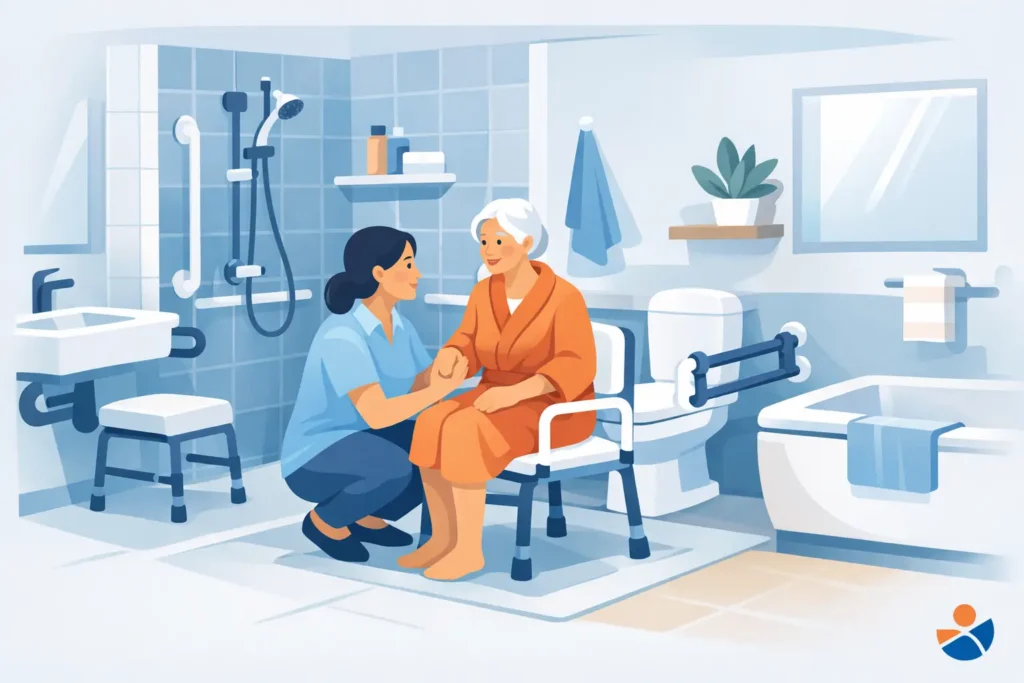
Bathroom Adaptations for Carers That Make a Difference
A difficult transfer into the bath can turn an ordinary morning into the most stressful part of a carer’s day. It can leave the person being supported feeling exposed or dependent, while the carer worries about slips, back strain and getting the routine right. Thoughtful bathroom adaptations for carers can change that experience, making washing safer, calmer and more dignified for everyone involved.
The right answer is rarely simply to add a grab rail or replace a shower tray. A bathroom needs to work for the person using it, the person providing support and the realities of the home itself. That means considering mobility, confidence, space, preferred bathing routine and whether needs may change over time.
Start with the everyday care routine
Before choosing a walk-in bath, wet room or shower seat, it helps to look closely at what happens in the bathroom now. Where does the person become unsteady? Do they need help stepping over the side of the bath, standing at the basin or turning to sit down? Is a carer having to reach across the room or support most of the person’s weight during a transfer?
These details matter because a solution that looks good on paper may not improve the actual routine. For example, a shower over a bath may be fine for someone who can stand securely, but it is not a comfortable long-term option for a person who needs seated washing and close support. Equally, a full wet room can be an excellent choice for wheelchair access, but a walk-in shower with a low-level tray may suit a smaller bathroom and a person who still has good balance.
The person receiving care should remain central to the conversation. Adaptations should support their choices, rather than making the room feel like a clinical space arranged around their condition. Attractive tiles, coordinated fittings and well-planned storage can make a safer bathroom feel like part of the home.
Bathroom adaptations for carers: the options that help most
Walk-in showers and wet rooms
For many households, removing the high side of a conventional bath is the single biggest improvement. A walk-in shower provides low or level access, reducing the need to lift legs over a bath edge. With a properly positioned shower seat, grab rails and easy-to-reach controls, the person may be able to wash with less hands-on help.
A wet room takes this a step further by creating a level floor throughout the showering area. This can make entry easier for wheelchair users, walking-frame users and carers who need room to stand alongside. It also removes the small raised lip that can still be a trip hazard on some shower trays.
However, a wet room is not automatically the best choice for every property. Good drainage, waterproofing and careful floor gradients are essential, and the layout must stop water travelling into unsuitable areas. A professional survey can establish whether the room is suitable and how the work can be completed with minimal disruption.
A shower seat that supports safe transfers
A fixed or fold-down shower seat can make washing less tiring for someone who cannot stand for long. It also gives carers a more stable and predictable position from which to assist, rather than trying to support someone who is becoming fatigued or unsteady.
The seat needs to be fitted at the right height and in the right place. There should be enough clear space for a carer to approach safely, and shower controls should be reachable without twisting or stretching. Where transfers are more difficult, a larger seat, support arms or a different bathing solution may be more appropriate.
Walk-in baths and shower baths
Some people genuinely prefer a bath and do not want to give up the comfort of soaking in warm water. A walk-in bath has a watertight door and a low threshold, allowing the user to step in without climbing over a high bath side. Models are available in full-length and shorter designs, so the choice can reflect both the user’s preferences and the size of the room.
A walk-in shower bath can be a useful compromise where one person wants a bath and another prefers to shower. It may work particularly well in a shared household, although it is worth being honest about the transfer involved. The person must still be able to enter, turn and sit down safely, even with a low doorway. For someone who needs significant support or uses a wheelchair, a level-access shower or wet room is often easier for carers to manage.
Assisted power baths may also be considered where extra support is needed to help someone lower into and rise from the bathing position. These can offer a more comfortable bathing experience, but they need to be chosen around the individual’s movement, posture and confidence rather than as a one-size-fits-all answer.
Bath lifts for a familiar bathroom
A bath lift can be a sensible option where the existing bathroom is otherwise safe, the person wants to keep their current bath and their needs are relatively straightforward. It lowers the bather into the water and raises them again afterwards, reducing the strain of getting up from the bottom of the bath.
It is often less disruptive than a full refurbishment, but it does not remove the need to step over the bath side. For that reason, it may be better suited to somebody with limited strength or stiffness than to someone with poor balance, severe mobility restrictions or a high falls risk.
Layout matters as much as the equipment
The most helpful adaptation can fail if there is not enough room to use it properly. Carers need clear access beside the shower seat, bath or toilet so they can support a transfer without working in an awkward position. Wheelchair users may need sufficient turning space, while walking-frame users need a route that is free from narrow gaps, loose mats and clutter.
Storage deserves attention too. Frequently used items such as towels, soap, continence products and clean clothing should be within easy reach. If a carer has to leave the room to fetch something, the person may be left alone when they are at their most vulnerable.
Small details can have a large effect. Thermostatic shower controls help prevent sudden temperature changes. Lever taps are easier to use than stiff twist taps. Non-slip flooring, well-placed lighting and a shower handset on a rail all improve control. Grab rails should be positioned according to how the person moves, not simply installed wherever there is an empty wall.
Protect the carer as well as the person receiving care
Caring should not mean repeated lifting, twisting or reaching in cramped spaces. Over time, even small daily strains can cause back, shoulder and wrist problems. A better bathroom layout reduces the need for a carer to take someone’s weight and can make personal care less physically demanding.
It is also about emotional comfort. Personal washing is private, and many people feel frustrated or embarrassed when they need help. Adaptations that allow someone to do more for themselves – perhaps washing independently from a shower seat, or entering a shower without being steadied – can restore a sense of control. When assistance is still needed, enough room and the right fittings can make it feel more respectful and less rushed.
Plan for the next stage, not only today
Mobility needs can change gradually or after an illness, operation or fall. It is sensible to choose a bathroom design that has some flexibility, particularly if the work is a major investment. That might mean allowing space for a future shower seat, selecting a shower area that can accommodate assisted washing, or choosing easy-clean surfaces that will remain practical as care needs increase.
This does not mean installing equipment that is unnecessary now. It means avoiding a design that creates another expensive problem a year or two later. A good home assessment considers what is difficult today, what is likely to remain important and what could realistically change.
For families arranging work for a parent or relative, a visit at home can be especially valuable. It gives everyone an opportunity to talk through routines, measure the available space and see practical options without pressure. Affect Ability’s friendly care team can help match a bespoke bathroom design to the household’s needs, from a simple bath lift to a complete accessible wet room.
The best bathroom adaptation is one that makes the next wash feel ordinary again: safe access, enough space, warm water, privacy and a little more independence where it matters most.