

Do Walk-In Baths Leak? What Keeps Them Watertight
A walk-in bath door is designed to hold back a full bath of water, so it is understandable to ask: do walk-in baths leak? When a quality bath is correctly selected, fitted and looked after, it should not leak. The door closes against a purpose-made watertight seal, allowing you to enjoy a proper soak without climbing over a high bath side.
For many people, the real concern is not only water on the floor. It is whether a walk-in bath will feel reliable enough to use independently, whether it will protect an existing bathroom, and whether help will be available if anything goes wrong. Those are sensible questions, particularly when bathing safely at home matters every day.
Do walk-in baths leak in normal use?
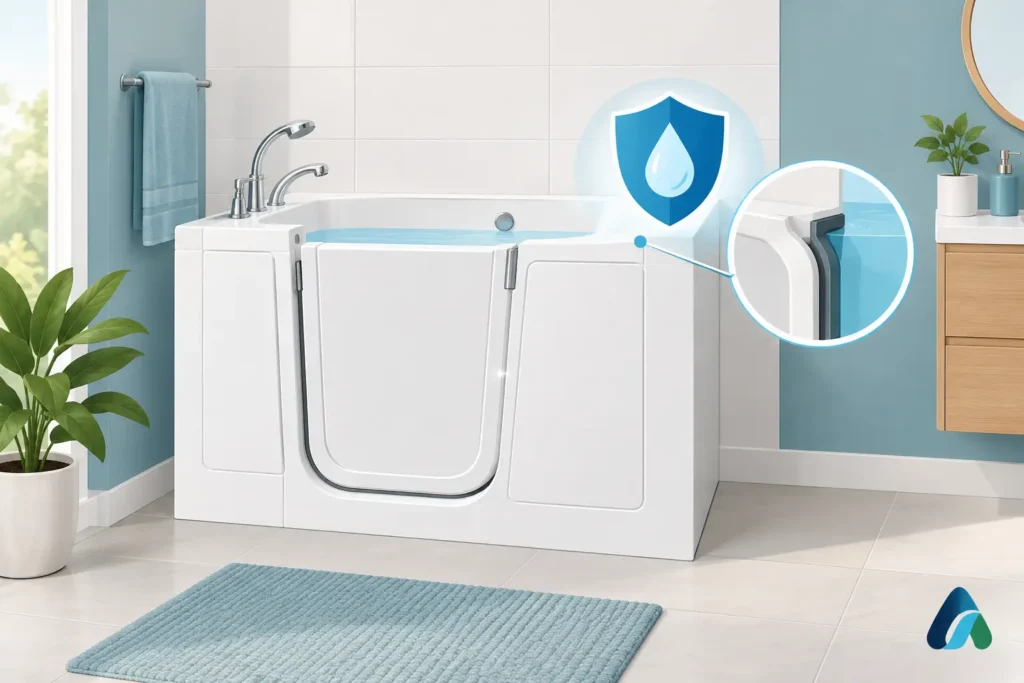
No, they should not. A properly fitted walk-in bath has a hinged, inward-opening or outward-opening door with a strong compression seal around its edge. Once the door is shut and secured, the seal is pressed firmly into place to prevent water escaping.
The direction of the door matters. Many inward-opening doors use the pressure of the water itself to help keep the door closed against its seal. This is a simple, reassuring design feature. Outward-opening doors can also be fully watertight, but their locking mechanism and seal must be in excellent condition because the water pressure pushes against the door.
Like any bathroom fitting, however, a walk-in bath is not something to choose on appearance alone. The quality of the bath, the suitability of the model for the user, and the standard of installation all make a difference. A low-cost product fitted without proper preparation may create problems that a well-managed installation would avoid.
How a walk-in bath door stays watertight
The seal is usually a flexible rubber or silicone-style gasket fitted around the door frame. It is designed to create an even barrier when the door is closed. The locking handle or lever draws the door tightly into the frame, compressing the seal sufficiently to keep water inside the bath.
A good seal needs a clean, even surface to work against. That is why the bath must be installed level, with the frame correctly aligned and the surrounding floor and wall finishes completed carefully. If a bath moves after installation, or if the door is not sitting squarely, the seal may not make consistent contact all the way around.
It is also worth remembering that a walk-in bath has more engineering than a standard bath. Depending on the model, it may include a low-entry door, a contoured seat, thermostatic controls, shower fittings, whirlpool jets or assisted bathing features. These should all be fitted and tested as part of the complete bathroom project, not treated as separate add-ons.
What can cause a walk-in bath to leak?
Leaks are uncommon with a good-quality bath and careful fitting, but they can happen. The cause is not always the door seal itself. Water may be coming from pipework, a shower screen, waste connections or damaged sealant around the bath, which can make the problem look more worrying than it is.
Door-related leaks are most often linked to wear, dirt or accidental damage. Soap residue, bath oils, hair and limescale can build up around the seal and stop it from closing evenly. A torn or flattened seal may also need replacing after years of regular use. Slamming the door, forcing a handle or using harsh cleaning products can shorten its life.
Installation issues can be another cause. Uneven floors are common in older properties, and bathroom walls are not always perfectly straight. A specialist installer accounts for these details before fixing the bath in position. They will ensure the base is fully supported, plumbing is sound, the waste drains correctly and the door operates freely before the room is handed back.
A leak can also occur if the door has not been fully closed or locked. This is usually easy to avoid once you are familiar with the handle and closing action. During a home assessment, it is helpful to discuss hand strength, dexterity and whether the person using the bath will be able to operate the lock comfortably. The best walk-in bath is one that feels safe and straightforward to use, not simply one that fits the room.
Simple ways to protect the door seal
A little routine care goes a long way. After bathing, wipe the seal and the edge of the door with a soft cloth to remove moisture and residue. Check that there is no hair, grit or product build-up trapped around the frame before filling the bath next time.
Use a mild, non-abrasive bathroom cleaner rather than bleach-heavy or gritty products. These can damage the seal over time. Avoid petroleum-based sprays unless the manufacturer specifically recommends them, as they may affect rubber components.
Every so often, look closely at the seal. It should feel flexible and sit evenly in its channel, without splits, deep creases or sections pulling away. If the handle becomes stiff, the door appears misaligned, or you notice even a small amount of water where it should not be, stop using the bath until the issue has been checked. A small problem is usually much easier to put right before it becomes a larger repair.
Why professional fitting gives extra reassurance
A walk-in bath is a long-term home adaptation, so the fitting work deserves the same care as the product itself. Correct plumbing, secure floor support, neat waterproof finishes and testing under normal operating conditions are all part of making the bathroom dependable.
A specialist assessment also looks beyond the risk of leaks. It considers whether a full-length bath, compact sit-in bath, walk-in shower bath or level-access wet room will give the best balance of safety, comfort and independence. For someone who enjoys soaking but struggles with a high bath side, a walk-in bath can be life-changing. For another person, especially where standing transfers are difficult or a wheelchair is used, a wet room may be the more practical choice.
There is a trade-off to consider with any walk-in bath: you need to be seated inside while it fills and wait for it to drain before opening the door. Modern fast-fill taps and quick-drain systems can reduce that waiting time, but it remains an important part of the daily routine. Discussing these practicalities honestly helps ensure the finished bathroom suits the person, not just the floor plan.
At Affect Ability, installations are planned around individual needs and completed as part of a properly managed bathroom adaptation. Customers also benefit from lifetime bath-door-seal cover, offering welcome reassurance that the part people understandably worry about is not overlooked after fitting.
When should you ask for help?
If water appears on the floor after a bath, first check whether it may have come from splashing, shower use or a loose shower hose. Then inspect the outside of the door and the area beneath the bath without attempting to dismantle any parts.
A few drops after cleaning are different from a persistent trickle while the bath is full. Persistent water, a loose door, visible seal damage or a change in how the locking handle feels should be assessed promptly. Do not try to patch a door seal with household silicone or adhesive. An unsuitable repair can make it harder to identify the real fault and may stop the door closing properly.
A reliable walk-in bath should give you confidence, not leave you watching the floor every time you run the water. With the right product, careful installation and straightforward seal care, it can provide a warm, relaxing bath with safer access and the independence to enjoy it on your own terms.