

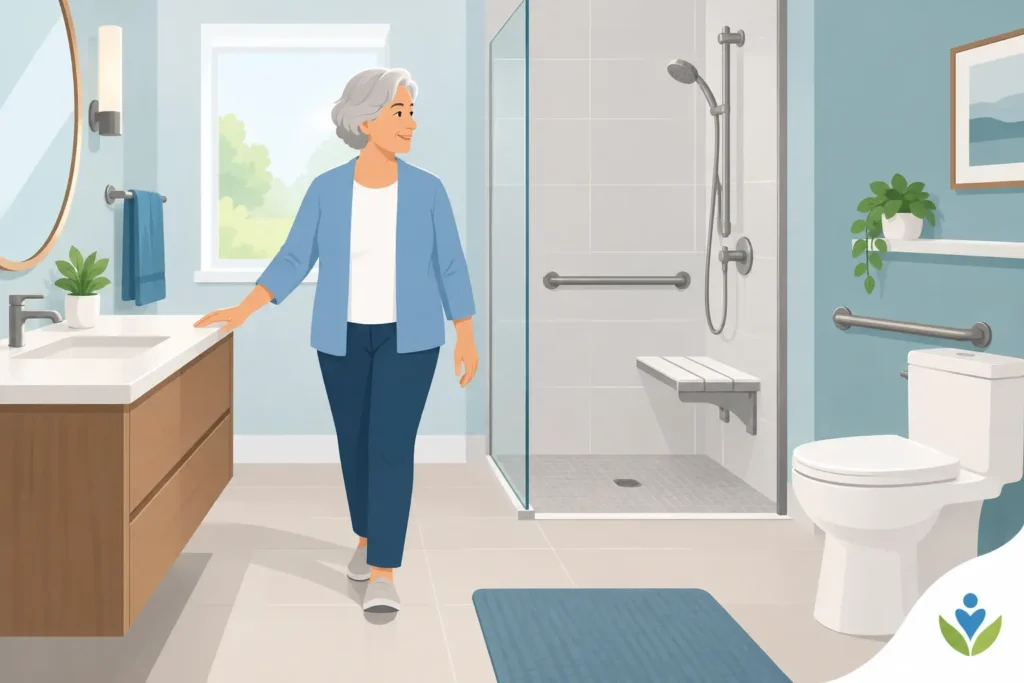
Senior Bathrooms That Support Independence
A bathroom can become difficult long before someone stops enjoying the rest of their home. A high bath side, a cramped shower cubicle or a slippery floor may turn a familiar daily routine into something that requires help from a partner, relative or carer. Well-designed senior bathrooms remove those barriers while keeping the room warm, attractive and personal.
The right adaptation is not about filling a room with clinical-looking equipment. It is about making bathing safer, more comfortable and more manageable, whether that means a simple shower alteration, a walk-in bath or a fully level-access wet room. The best choice depends on how the person uses the bathroom now, what they find difficult, and what will help them stay independent in the years ahead.
Start with the everyday difficulty
A safer bathroom begins by identifying the moment that feels least secure. For some people, it is stepping over the side of a bath. For others, it is standing for the length of a shower, turning in a narrow space, getting up from the toilet or reaching controls while seated.
These details matter because different problems call for different solutions. A person who still enjoys a long soak may benefit most from a walk-in bath with a low-entry door and built-in seat. Someone who uses a wheelchair, or who needs room for assistance, may be better served by a wet room with level access and a layout designed around transfers.
It is also worth considering the whole household. One bathroom may need to work for an older adult with reduced mobility, a visiting grandchild and a partner with no mobility concerns. Good design should make the room easier for everyone without making anyone feel singled out.
Senior bathrooms should suit the person, not a catalogue
There is no single model for senior bathrooms. The most successful rooms are planned around the individual, their home and the support they may need. A home assessment can reveal possibilities that are easy to miss when looking at products in isolation, such as whether moving a doorway creates a better turning area or whether an unused bath can be replaced with a generous showering space.
Walk-in baths for comfortable seated bathing
Walk-in baths allow the user to enter through a sealed door rather than climbing over a high bath edge. Many include an integral seat, easy-to-reach taps and handheld shower controls. They can be an excellent choice for people who prefer bathing to showering but no longer feel safe stepping in and out of a conventional bath.
There are trade-offs to consider. The user usually needs to be inside the bath while it fills and remains there while it drains, so warmth, comfort and the speed of the bathing routine should be discussed. A full-length model may suit someone who values the feeling of a traditional bath, while a shorter sit-in option can free up valuable room in a smaller bathroom.
Walk-in showers for straightforward daily use
A walk-in shower can make everyday washing simpler, particularly where stepping over a tray has become a concern. Depending on the layout, it may include a low-level tray or completely level entry, a fold-down seat, grab rails and a thermostatic shower that helps prevent sudden temperature changes.
A fixed glass screen can keep the room feeling open and contemporary, but it is not always the most practical choice where a carer needs closer access. In those cases, a wider opening or a carefully designed wet room may give more flexibility. The aim is not simply to create a shower that is accessible on day one, but one that continues to work if mobility changes.
Wet rooms for level access and flexible space
A wet room has a gently graded floor that directs water to a drain, allowing shower access without a raised tray. This can be especially helpful for wheelchair users, people who use walking aids, or anyone who finds changes in floor level unsettling.
Because the floor and walls are fully waterproofed, the room needs careful preparation and skilled installation. Drainage falls, flooring choice and waterproofing cannot be treated as afterthoughts. When planned properly, however, a wet room can offer a spacious, easy-to-clean bathroom that feels far removed from a hospital setting.
Small design choices make a major difference
Safe access is only part of the picture. Everyday comfort often comes from the quieter details: lighting that clearly shows the floor and controls, non-slip flooring that still looks stylish, lever taps that are easier to operate, and towel storage within comfortable reach.
A toilet may need to be slightly higher or have discreet support rails nearby. A basin should leave enough knee space for a seated user where required, while mirrors and shelving need to be positioned at a useful height. Contrasting colours between walls, floors and fittings can also make edges easier to distinguish for people with reduced sight.
Good lighting deserves particular attention. A bright central light is useful, but task lighting around the mirror and gentle night lighting can help prevent uncertainty during an early-morning or overnight bathroom visit. These are practical improvements, not luxuries, when confidence and falls prevention are at stake.
Plan for transfers and assistance with dignity
If someone needs help from a family member or carer, the bathroom must provide safe room for two people to move. This may affect the best position for the shower, toilet, basin and door. An outward-opening door or sliding door, for example, can preserve valuable internal space and make access easier if a person falls or needs support.
Equipment such as bath lifts can be a practical answer where a conventional bath is otherwise suitable and the user can still transfer safely. Power baths may help those who need a more supported bathing experience. These options can avoid a full refurbishment in some circumstances, although they will not solve every layout or mobility challenge.
The important point is to have an honest conversation about present needs and likely future needs. Choosing the cheapest short-term change can sometimes mean paying for another major alteration a year or two later. Equally, not every person needs a complete wet room. A genuine recommendation should match the solution to the person, rather than pushing the largest project.
A bathroom can still reflect your taste
Many people delay an adaptation because they worry it will make their home look institutional. That concern is understandable, but accessible design has moved well beyond basic white fixtures and obvious medical aids.
Today, there is a wide choice of wall finishes, shower screens, furniture, flooring and fittings. Grab rails can be selected in finishes that complement the taps and accessories. Shower seating can fold away neatly. A walk-in bath can sit comfortably within a coordinated bathroom scheme. The room can feel calm, contemporary or traditional while still doing the practical work required of it.
For families arranging a bathroom for a parent or relative, involving them in these choices is especially valuable. Independence is not only about being able to wash without fear. It is also about retaining control over the home and the surroundings that feel familiar.
Choose an installer who understands the whole project
Accessible bathroom work involves more than fitting a bath or shower. It may include plumbing, electrics, flooring, ventilation, waterproofing, tiling and adjustments to the room layout. Clear project management helps reduce disruption and makes sure the finished bathroom works as intended.
Before agreeing to work, ask how the installer will assess needs, manage the installation, protect the home during work and deal with any aftercare. It is sensible to ask about guarantees, workmanship and what happens if an unexpected issue is found once the existing bathroom is removed. A clear answer provides far more reassurance than a vague low price.
For households across South Wales, Affect Ability takes a needs-led approach, from a no-obligation home visit through to installation and aftercare. That matters when the project is personal, urgent or being arranged from a distance by an adult child.
A safer bathroom should never feel like a loss of choice. With thoughtful planning, it can be a room that restores confidence at the start or end of every day, making life just that bit easier at home.