

Choosing Mobility Bathroom Installers Wisely
A bathroom can become difficult long before it becomes impossible. Perhaps stepping over the bath side now feels unsteady, standing for a shower is tiring, or a family member needs more support with transfers. Choosing mobility bathroom installers is therefore not simply a matter of finding someone to fit new equipment. It is about trusting people to make a personal part of home life safer, easier and still recognisably yours.
The right installer will listen carefully, assess the room as well as the person using it, and take responsibility for the whole job. That includes the design, plumbing, flooring, electrics, finishing touches and aftercare – not just delivering a walk-in bath or shower tray.
Start with your everyday routine
Before comparing installers, be clear about what is becoming difficult. The best solution depends on how you bathe now, what you would like to continue doing independently, and whether your needs may change over time.
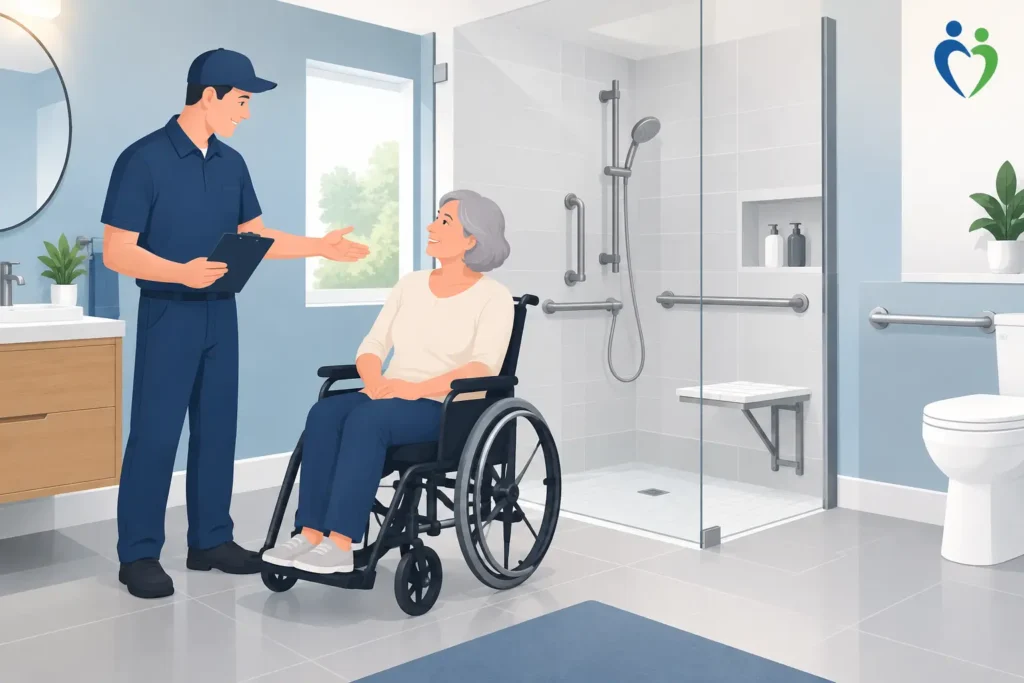
For some people, a level-access walk-in shower with a fold-down seat and well-positioned grab rails is the most comfortable option. A wheelchair user may need a wet room with enough turning space, a suitable basin height and room for assisted transfers. Someone who enjoys a long soak but struggles with the bath edge may prefer a full-length or short-length walk-in bath. A powered bath, bath lift or walk-in shower bath can also be the right answer where support is needed but a full refurbishment is not yet necessary.
A good installer should not arrive with one product already in mind. They should ask about your mobility, balance, reach, strength, medication, pain levels and whether a partner, carer or family member also uses the room. They should consider the doorway, ceiling, windows, drainage, boiler performance and where the existing pipework sits. These details are what turn an attractive brochure image into a bathroom that works every day.
Choosing mobility bathroom installers with specialist knowledge
A general bathroom fitter may produce lovely bathrooms, but mobility adaptations bring different practical considerations. A specialist understands that a few centimetres of space, the direction a door opens or the height of a shower control can make a major difference to safety and comfort.
Ask prospective installers how they approach accessible layouts. They should be able to explain why they recommend a particular bath, shower or wet room rather than relying on vague assurances. They should also discuss slip-resistant flooring, drainage gradients, waterproofing, ventilation, lighting and safe access to controls. If they are fitting a walk-in bath, ask how the door seal is supported and what cover is provided should it ever need attention.
The conversation should feel respectful, never rushed or patronising. You are not choosing a clinical room. You are choosing a space where you can wash, relax and maintain your routine with dignity. A specialist should be equally interested in the colour, furniture, tiles and finish you want, as well as the practical equipment you need.
A home assessment should be genuinely useful
An in-home assessment is usually the most reliable way to understand what is possible. It gives the installer the chance to measure accurately, identify hidden complications and see how you move around the room. It also allows you to talk through concerns in familiar surroundings, with a relative or carer present if you wish.
Use this appointment to test the quality of their advice. Do they explain choices in plain English? Do they offer alternatives at different price points? Are they honest where a preferred option may not suit the room or your current mobility? Genuine recommendations sometimes mean saying that a simpler solution is better value and more suitable.
It is also reasonable to ask how they would deal with an unexpected issue, such as damaged floorboards, outdated pipework or an awkward soil pipe. Older homes across South Wales can have their own quirks. A prepared installer will explain how such work is priced and authorised before proceeding, rather than leaving you with a surprise bill.
Look beyond the initial quotation
A low figure can be reassuring at first, but it is only meaningful if you know exactly what it covers. A detailed written quotation should set out the products, labour, removal of the old suite, plumbing and electrical work, wall and floor finishes, waste disposal and any making-good work. It should also clarify whether decoration, accessories and final cleaning are included.
Be particularly careful with quotations that price only the bath or shower installation. In a mobility bathroom, the surrounding work matters just as much. A walk-in shower needs properly formed falls so water drains away as intended. A wet room requires effective waterproofing beneath the finished surface. Grab rails must be fixed into suitable structure, not simply attached where they look convenient.
Price matters, and households understandably have a budget to protect. Yet the cheapest quote can become expensive if the work is incomplete, rushed or requires repairs later. Compare like for like, ask what quality of materials will be used and find out whether flexible payment options are available if they would make the project more manageable.
Confirm who manages the project
Bathroom adaptation work often involves several trades. You should know who is responsible for coordinating them and who your point of contact will be from the first visit to the finished room.
Ask whether the company uses its own experienced installation team or subcontracts work, and who checks the final standard. There is no single right model, provided responsibilities are clear and the company stands behind the result. What matters is that you are not left chasing separate tradespeople when you need answers.
At Affect Ability, the aim is to manage the process from the home assessment through to fitting and aftercare, so customers have one caring team to contact. That approach can be particularly valuable when the adaptation is needed quickly after a fall, a change in health or a hospital discharge.
Ask about workmanship, disruption and aftercare
A bathroom installation is disruptive, even when it is carefully planned. A dependable installer will explain the expected timescale, when water may be unavailable and how they will protect nearby areas of your home. They should work tidily, remove waste and leave the bathroom safe at the end of each day wherever possible.
Rapid installation may be possible for suitable, straightforward projects, but speed should never come at the expense of waterproofing, secure fitting or a proper finish. Be wary of promises that sound too good to be true. Ask what preparation is needed before installation starts and what could affect the timetable.
Aftercare deserves the same attention as the fitting itself. Find out what guarantee applies to workmanship and products, how long it lasts, and how to request help if something is not right. Clear, no-quibble support offers reassurance that the company will return to resolve a genuine issue rather than treating the final payment as the end of the relationship.
Check evidence, not just polished photographs
Photographs can show a smart finished bathroom, but they cannot tell you whether the team arrived when promised, treated the household kindly or dealt well with a problem. Look for detailed customer feedback that mentions communication, cleanliness, reliability and the practical difference the new bathroom has made.
It can also help to ask for examples of projects similar to yours. If you need a compact shower room adapted for assisted bathing, a large luxury wet room portfolio may not answer your questions. If a walk-in bath is your preferred option, ask to understand the door opening, seat height, filling and emptying time, and how it will fit into your existing room.
Give yourself permission to ask questions
This is your home and your independence. You should feel able to ask an installer to repeat an explanation, provide the detail in writing or give you time to discuss the decision with family. Pressure to sign immediately is rarely a good sign, especially for a significant home adaptation.
The most reassuring choice is often the installer who combines specialist knowledge with patience: someone who understands the technical work but also recognises why this change matters. With the right advice and careful craftsmanship, a mobility bathroom can make life just that bit easier while remaining a comfortable, attractive room you are pleased to use.