

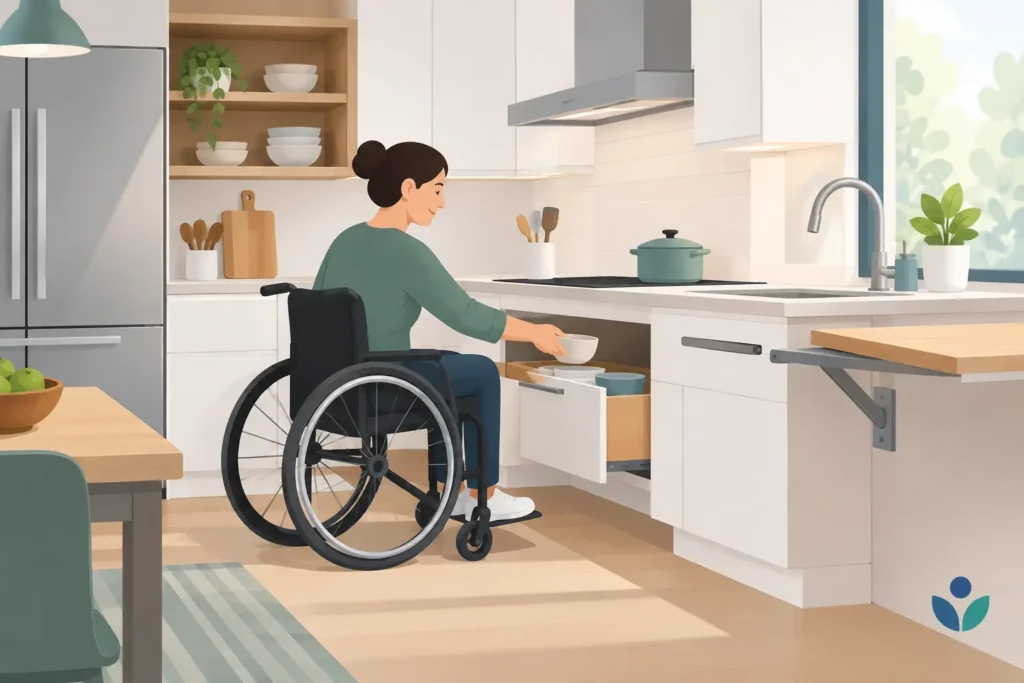
Kitchen Adaptations That Make Everyday Life Easier
A kitchen can become difficult long before it becomes impossible to use. Reaching a high cupboard, carrying a hot pan across a narrow space or standing at the worktop for ten minutes can turn a familiar routine into a tiring and worrying task. Well-planned kitchen adaptations help keep the room at the heart of home life, giving you more choice, safety and confidence in the everyday jobs that matter.
The right solution is rarely about filling a kitchen with specialist equipment. It is about understanding how you cook, move and manage at home, then making thoughtful changes that feel natural to use and still suit your personal style.
Start with the tasks that are becoming difficult
A good accessible kitchen begins with an honest look at the daily routine. Perhaps bending to reach the oven is uncomfortable, or a wheelchair cannot turn easily between the sink and worktop. You may be managing well in the morning but finding pain or fatigue makes preparing an evening meal much harder.
These details shape the design. A person who mainly needs to sit while preparing food may benefit from a lowered worktop and clear knee space beneath it. Someone with limited grip may find lever taps, easy-hold handles and drawers far more useful than changing the whole room. For a wheelchair user, circulation space, worktop height and appliance access are likely to be central from the outset.
It also helps to think beyond cooking. Where do you put shopping when you arrive? Can you make a drink safely without carrying a kettle across the kitchen? Is there somewhere comfortable to sit while peeling vegetables or speaking with family? The most successful adaptations support the whole routine, rather than solving one isolated problem.
Kitchen adaptations that make a practical difference
Adjustable or carefully chosen worktop heights
Standard worktops do not suit everyone. A lower section can allow a wheelchair user or someone seated on a perching stool to prepare food comfortably. In households with people of different heights or mobility needs, rise-and-fall worktops can provide flexibility, moving at the touch of a control.
An adjustable worktop is not always necessary. A fixed-height design can be a sensible, cost-effective choice where one person has clear requirements. What matters is ensuring there is enough usable surface at the right height, with open space underneath if seated access is needed.
Easy-access storage
Cupboards that require reaching, stretching or crouching can become a daily source of frustration. Deep drawers, pull-out shelves and pull-down baskets bring items closer without forcing you to bend or climb. D-shaped handles and easy-grip pulls can also make doors and drawers easier to open for people with arthritis or reduced hand strength.
Storage should reflect what you use most. Everyday plates, mugs, tins and cookware belong between waist and shoulder height wherever possible. Heavier items should not be stored high up, even if there is space available. Keeping the essentials within easy reach can reduce the risk of falls and spills.
Safer cooking arrangements
The position and type of cooker can change how safe cooking feels. A side-opening oven at a comfortable height avoids the need to bend low and lift hot dishes upwards. A pull-out shelf beneath the oven can provide a nearby resting place for trays, reducing the distance a hot meal needs to travel.
Induction hobs are often a reassuring option because the surface itself does not remain hot in the same way as traditional electric rings. Controls placed at the front may be easier to reach than those at the back, provided they cannot be knocked accidentally. For some people, a smaller cooking area is more manageable and leaves useful worktop space nearby.
No appliance removes every risk, especially where memory difficulties or reduced sensation are involved. Timers, clear controls and sensible positioning all play a part. The aim is to create a setup that lets you prepare meals with less strain and fewer hazards.
A sink and taps that are comfortable to use
Washing up, filling a saucepan and rinsing vegetables involve more movement than many people realise. A shallow sink can be easier to use from a seated position, while a mixer tap with a lever handle requires less grip and twisting than a traditional tap. Some kitchens benefit from a tap with a pull-out spray, particularly when reaching around the sink is difficult.
The space beneath the sink may need to be open for wheelchair access. This requires careful planning around pipework and protection from hot surfaces, but it can make a significant difference to comfort and independence.
Room to move safely
A beautiful kitchen will still feel restrictive if there is not enough space to move through it with a walking frame, wheelchair or companion nearby. Clear routes between the doorway, sink, hob, fridge and seating area make everyday use easier. This may mean choosing slimmer units, rearranging appliances or removing an island that interrupts the natural route through the room.
For wheelchair users, turning space is especially important. It is also worth considering whether doors, bins and drawers can be opened without blocking the route. Small layout details can make the difference between being able to work independently and needing to ask for help.
Design for independence without a clinical feel
Accessible does not have to mean impersonal. Kitchen adaptations can be matched to the colours, cabinet styles and finishes you already enjoy. Warm wood-effect doors, modern matt units, attractive handles and well-placed lighting can make the room feel welcoming while still being highly practical.
Contrast is useful too. A worktop that differs clearly from the cupboard doors can make edges easier to see, while good task lighting helps with chopping, reading labels and using controls. This can be particularly helpful for people with reduced vision, but it also makes the kitchen more pleasant for everyone.
Seating deserves proper consideration. A stable chair or perching stool in the right place can reduce fatigue without creating an obstacle. If someone spends time in the kitchen with a carer or family member, a small seated area can keep the space sociable rather than turning food preparation into a separate activity.
Why a home assessment matters
Measurements alone do not tell the full story. A kitchen needs to work with the way you enter the room, transfer from a wheelchair, reach a cupboard and cope on a more difficult day. A home assessment allows these details to be considered in the actual space, including doorways, natural light, plumbing, electrics and the needs of everyone in the household.
It is also the time to discuss priorities. Some people need a complete accessible kitchen because the existing layout no longer works. Others may gain a great deal from a more focused update, such as easier storage, a raised oven and a seated preparation area. There is no benefit in paying for features that do not support your daily life.
For families arranging changes for a relative, involving that person in the choices is vital. A kitchen is personal. Respecting preferences around appearance, cooking habits and independence helps ensure the finished room is welcomed and used with confidence.
Plan for the years ahead, not just today
Mobility needs can change, and a kitchen refurbishment is a good opportunity to think ahead. Leaving room for a wheelchair route, selecting drawers instead of low cupboards, or choosing an appliance layout that reduces bending can make the home more adaptable over time.
That does not mean every kitchen needs every possible feature. A future-ready design should remain proportionate to your circumstances, budget and property. The best plans offer useful flexibility while keeping the room straightforward, attractive and comfortable now.
Affect Ability takes a needs-led approach to accessible kitchens, from the first home visit through to design, installation and aftercare. The focus is not on making a kitchen look adapted. It is on making life just that bit easier, so preparing a meal, making a cuppa or sharing time with family can remain part of your day on your own terms.
If your kitchen is asking more of you than it used to, a few well-chosen changes can restore far more than convenience. They can help you keep your place in the home, safely and with dignity.